
Desk work does not decide whether laser treatment is appropriate; the diagnosis, hemorrhoid grade, prolapse, symptoms and general health do. By the end, you will know what an examination involves, where laser procedures fit among other treatments, and which questions to ask before planning treatment around commuting, sitting and work.
Key takeaways
- Desk work does not determine eligibility for laser hemorrhoid treatment.
- Internal hemorrhoid grade and prolapse guide the treatment choice.
- Plan several days for comfort, follow-up and a gradual return to sitting.
- Choose a surgeon who confirms the diagnosis before recommending laser treatment.
Does being an office worker make you eligible for laser hemorrhoid treatment?
Desk work does not make you eligible for laser treatment. A laser piles surgeon can treat an office worker when symptoms come from suitable internal hemorrhoids; the decision depends on diagnosis, prolapse and response to initial care. “Office worker hemorrhoids” is not a separate medical condition.
Arrange an examination instead of self-diagnosing if you have:
- Bright-red rectal bleeding
- A lump or swelling
- Itching or pain
- Mucus
- A feeling of incomplete evacuation
- Recurrent symptoms
These signs can also come from an anal fissure, fistula, abscess, rectal prolapse or colorectal disease. Severe, sudden anal pain needs prompt assessment because it can indicate a thrombosed hemorrhoid, abscess or fissure. A procedure designed for internal hemorrhoids is not a general treatment for every painful anal lump.
Initial care often comes before any procedure. It may include:
- 20–30 g of fibre daily
- Adequate fluids
- Psyllium if food alone does not provide enough fibre
- Avoiding straining
- Limiting time spent sitting on the toilet
- Treating constipation or diarrhoea
Improving bowel habits can reduce bleeding and prolapse and may remove the need for surgery. If symptoms persist or keep returning, an examination can establish whether laser treatment fits the actual condition rather than the patient’s occupation.
How do the examination and hemorrhoid grade determine treatment?
Treatment follows the diagnosis and prolapse, not the number of hours you spend at a desk. A laser piles surgeon must confirm hemorrhoids and decide whether the internal disease suits the proposed treatment.
1. The consultation starts with your bleeding, lump, itching, pain, mucus, incomplete evacuation and recurrence, followed by questions about constipation, diarrhoea, straining and toilet habits.
2. The clinician inspects the anus for external hemorrhoids, skin tags, fissures, fistula openings, prolapse and swelling. A tender lump could indicate a thrombosed external hemorrhoid or abscess rather than uncomplicated internal disease.
3. A digital rectal examination checks the anal canal and rectum for tenderness, masses, narrowing and other causes of bleeding. The clinician then uses anoscopy or proctoscopy to view internal hemorrhoids and the bleeding source.
4. Internal hemorrhoids are classified by prolapse. Grade I bleed without prolapsing; Grade II prolapse during straining but return spontaneously; Grade III require manual replacement; Grade IV remain prolapsed and cannot be reduced.
This examination also identifies mixed internal and external hemorrhoids, prominent skin tags and prolapse that a laser procedure may not correct. Grade, prolapse, symptoms and the actual diagnosis matter more than your occupation.
Colon evaluation may be considered when you have anaemia, altered bowel habits, a family history of colorectal disease, overdue screening, older age or another risk factor. Rectal bleeding should not be blamed on hemorrhoids without appropriate assessment.
What happens before, during and after a laser procedure?
A suitable patient has confirmed internal hemorrhoids and a plan matched to their grade and prolapse. A laser piles surgeon should explain the named technique, device, treatment target and anaesthesia before you consent.
1. Before treatment, the surgeon reviews your symptoms, examines the anus and rectum, and may perform anoscopy or proctoscopy. Ask whether the plan is laser hemorrhoidoplasty, which uses laser energy to shrink coagulated internal tissue, or the HeLP procedure, which uses Doppler localisation to target feeding vessels.
Anaesthesia may be local, regional or general, depending on the technique and your health.
2. During treatment, time depends on the number and grade of hemorrhoids. The surgeon places the device or laser fibre at the intended internal target; laser methods do not automatically remove every prolapsing or external component. You may leave the same day after observation if your recovery is stable and the clinic gives discharge instructions.
3. Afterward, expect some bowel-movement discomfort, swelling, minor bleeding, urgency or tenesmus, constipation and possible difficulty urinating. Lower pain than excisional surgery does not mean zero pain or zero recovery. Your instructions should specify how long to limit sitting, commuting, lifting and desk work, plus fluids, fibre, medicines and the follow-up appointment.
Contact the clinic urgently for heavy bleeding, fever, worsening pain or inability to urinate. Laser hemorrhoid recovery varies, so follow the individual plan rather than returning to a full workday because you feel well immediately.
When is laser not the best treatment for an office worker?
Laser does not remove every hemorrhoid. Some laser methods reduce blood flow to internal hemorrhoids; others shrink internal tissue with a fibre. They do not necessarily excise external tissue or repair a prolapse.
For many Grade I and Grade II cases, and selected Grade III cases, start with fibre, adequate fluids and bowel-habit changes when bleeding or modest prolapse is the main problem. Office treatments can then target the internal hemorrhoid without laser:
- Rubber-band ligation cuts off blood flow and suits many Grade I–II and selected Grade III hemorrhoids.
- Sclerotherapy injects fluid into the tissue to reduce bleeding.
- Infrared coagulation seals small bleeding vessels.
| Option | Main action | Best fit and trade-off |
|---|---|---|
| Fibre, fluids and bowel changes | Softer stools and less straining | First step when constipation drives symptoms; does not remove prolapse |
| Laser treatment | Reduces blood flow or shrinks internal tissue | Lower early pain than excision, but persistent prolapse or recurrence can require retreatment |
| Conventional hemorrhoidectomy | Removes hemorrhoidal tissue | More early pain and recovery, but stronger treatment for substantial external or prolapsing disease |
| Stapled hemorrhoidopexy | Mechanically lifts internal prolapse | Less external wound than excision; it does not treat a large external component reliably |
A substantial external component, large skin tags, thrombosed external hemorrhoid, abscess, fistula, combined internal and external disease, or Grade III–IV prolapse may require excision or mechanical repair. Ask a laser piles surgeon what happens if prolapse remains; early comfort is not worth later surgery if laser cannot correct the anatomy.
How should you choose a laser piles surgeon and plan treatment around work?
A laser piles surgeon is a descriptive marketing term, not a separate credential. Verify training in general surgery, colorectal surgery or proctology, plus documented experience with the specific laser technique offered.
Do not plan your return to work after hemorrhoid treatment from a generic promise. Ask for restrictions based on your grade, prolapse, procedure and bowel movements, then arrange transport and lighter duties if needed.
Use this consultation checklist:
- What grade and type of hemorrhoid do I have?
- Is there an external or mixed component?
- Why laser rather than fibre treatment, rubber-band ligation or surgery?
- What recurrence and retreatment rates do you see?
- What complications have your patients experienced?
- When can I sit, commute, lift, exercise and return to a full workday?
| Option | What it means | When it applies |
|---|---|---|
| Laser | Shrinks or reduces internal tissue without removing every prolapsing component | Selected internal hemorrhoids after examination |
| Fibre treatment | A different energy-based technique with its own target and evidence | Only when the surgeon names the device and method |
| Banding | Places a rubber band on internal hemorrhoidal tissue | Many Grade I and II cases, and selected Grade III cases |
| Surgery | Removes or mechanically repairs prolapsing tissue | Large external disease or substantial Grade III–IV prolapse |
At the Mumbai clinic of Dr. Jiten Chowdhry, an office worker can discuss diagnosis, treatment suitability and recovery planning rather than treat the clinic’s laser availability as proof of suitability. Choose examination-led advice over a laser label.
Related items
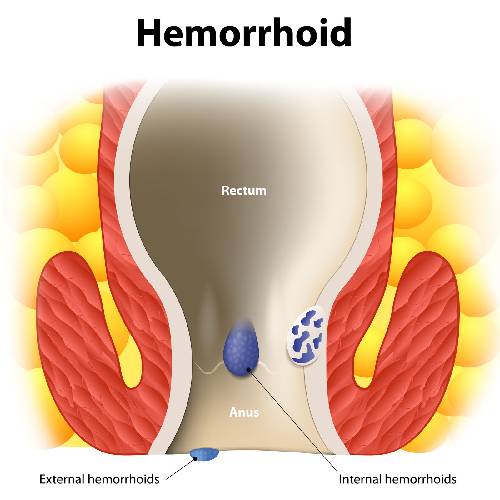 | Laser Treatment Hemorrhoids /Piles Hemorrhoids : Hemorrhoids are varicose (enlarged and swollen) veins around the outside of the anus or in the lower rectum. View product → |
Piles Treatment Piles are varicose (enlarged and swollen) veins around the outside of the anus or in the lower rectum. View service → |
Frequently asked questions
Does being an office worker make you eligible for laser hemorrhoid treatment?
No. Eligibility depends on the hemorrhoid diagnosis, internal prolapse and response to initial treatment, not your occupation.
How does hemorrhoid grade affect laser treatment?
A physical examination identifies the hemorrhoid grade and prolapse, helping the surgeon decide whether laser treatment, another procedure or conservative care fits best.
What happens before, during and after a laser hemorrhoid procedure?
The process includes examination and treatment planning, the laser procedure itself, post-treatment instructions, follow-up and a gradual return to sitting and desk work.
When is laser not the best treatment for an office worker?
Laser may not suit large external hemorrhoids, advanced prolapse, another anorectal condition or symptoms that need a different procedure.
How should you plan laser hemorrhoid treatment around work?
Ask about recovery, pain control, follow-up and sitting limits, then arrange leave and a gradual return based on your surgeon’s instructions.