

Rain, humidity and flooded roads can complicate appointments and recovery logistics, but Mumbai’s monsoon is not, by itself, a reason to postpone umbilical hernia assessment or necessary treatment. You will learn how to recognise an emergency, compare repair options, choose a suitable surgeon and protect your wound when damp conditions make aftercare harder.
Key takeaways
- Seek urgent care for severe pain, vomiting, or a swelling that will not go back in.
- Compare surgeon experience, repair technique, anaesthesia and hospital access—not only consultation fees.
- Plan extra travel time and carry surgical documents during Mumbai’s heavy rain.
- Keep the wound clean and dry; follow your surgeon’s dressing and bathing instructions.
Does Mumbai monsoon weather change when you should seek hernia care?
Rain and humidity do not reduce the need for assessment, and Mumbai’s monsoon is not a medical reason to postpone elective umbilical-hernia repair automatically. For anyone seeking a general surgeon for umbilical hernia during monsoon in Mumbai, the important questions concern symptoms, surgical risk and safe hospital access—not the calendar month.
- Watchful waiting can be reasonable after examination if the hernia is small, painless and easily reducible.
- Arrange assessment sooner if the swelling is enlarging, painful, limits activity or becomes difficult to push back.
- Tell the surgeon about diabetes control, smoking, obesity, anticoagulants, chronic cough and constipation; improving these risks can matter more than choosing a dry month.
- Discuss pregnancy or plans for pregnancy, because uncomplicated elective repair is often deferred during pregnancy; incarceration still needs urgent treatment.
- Proceed with planned care only when the hospital, anaesthesia team and postoperative contact are reliably accessible.
Flooding affects travel and follow-up, not the medical biology of the hernia. If surgery is scheduled, allow extra travel time, choose a route that avoids flooded roads and confirm that the hospital remains operational. A general surgeon can assess an adult umbilical hernia and advise whether open or laparoscopic repair is appropriate.
Do not delay urgent care because of heavy rain if pain escalates, the lump will not reduce, vomiting begins, the abdomen swells, or the skin changes colour.
How does a surgeon tell a harmless swelling from an emergency?
A surgeon starts by asking when the swelling appeared, whether it is growing or painful, and whether you have vomiting, constipation, previous abdominal surgery or a prior hernia. The examination includes standing, coughing and gentle palpation to see whether the lump changes and returns inside the abdomen.
An umbilical swelling may be a lipoma, diastasis recti, incisional hernia or abdominal-wall tumour, so do not label it a hernia without examination.
A soft swelling that reduces when you lie down or with gentle pressure is different from a firm, painful lump that will not go back in. Ultrasound helps when the diagnosis is uncertain or the defect is difficult to examine; CT is considered for obesity, unusually large defects or suspected complications.
Seek an emergency department immediately for:
- Vomiting
- Abdominal distension
- Inability to pass stool or gas
- Fever
- Red or dusky skin over the lump
- Rapidly worsening or severe pain
- A painful swelling that remains irreducible
These signs can indicate trapped or strangulated tissue. Do not wait for an outpatient appointment, even if heavy rain or flooded roads make travel difficult; use the safest available route to the nearest emergency department. A search for umbilical swelling treatment Bhandup should help you find local care, but locality must never delay emergency assessment.
What should you compare when choosing a surgeon and repair method?
Choose an umbilical hernia doctor in Mumbai for clinical judgement, not proximity or the claim that laparoscopy is always safer. The surgeon should examine you standing and coughing, assess whether the defect reduces, review previous operations and health risks, and explain why one repair fits your anatomy.
Ask these questions before consenting:
- How much experience do you have with both open and laparoscopic repair?
- Is an anaesthetist and suitable anaesthesia support available?
- Can you arrange ultrasound or CT if the examination is uncertain?
- Which mesh, size and position do you recommend, and why?
- How will you plan for recurrence or wound problems?
- Who will review me after surgery, and whom do I contact urgently?
| Option | Anaesthesia and access | Recovery, wounds and typical use |
|---|---|---|
| Open preperitoneal mesh repair | Local anaesthesia with sedation or general anaesthesia, depending on the case; one incision near the navel | One wound to monitor; common for many ordinary adult hernias; plan lifting restrictions and recurrence follow-up |
| Laparoscopic mesh repair | Usually general anaesthesia; several small abdominal incisions | Less pressure on one wound but more anaesthesia and abdominal access; consider for larger, recurrent or multiple defects, obesity or higher wound risk |
| Suture-only repair | Anaesthesia depends on the operation; no mesh | Discuss mainly for a very small defect, particularly below 1 cm; recurrence risk can be higher in symptomatic adults |
Mesh lowers recurrence for most symptomatic adult hernias. Dr. Jiten Chowdhry’s consultation can help a Mumbai patient match the operation to the defect and health risks rather than choose by procedure name alone.
Related items
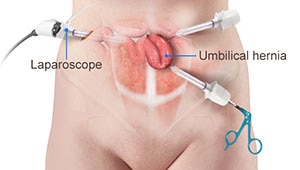 | Laparascopic Surgery For Umbilical Hernia Umbilical hernia is a bulge form in abdomen. In children, it is healed on its own but if this disease occurs in adults then a surgery is needed. View product → |
Hernia Treatment What is a Hernia? A hernia develops when a portion of the intestine or abdominal tissue protrudes through a weakened abdominal wall. View service → |
How should you plan an operation or emergency journey during heavy rain?
For hernia care during rainy season, elective repair does not automatically need postponement. Confirm that the hospital, anaesthesia team and postoperative contact number remain available, then plan around flooding, diabetes control, smoking, weight and other medical risks.
| Situation | What to do | Travel decision |
|---|---|---|
| Planned repair | Confirm hospital access, anaesthesia cover and follow-up | Avoid flooded roads and leave extra time |
| Emergency symptoms | Go to the nearest emergency department | Do not wait for a specialist appointment |
Before planned surgery, use this checklist:
- Carry prior reports, your medication list, allergy details, and information about anticoagulants or diabetes treatment.
- Arrange transport on a route that avoids known flooded roads.
- Ask when you may drive, lift objects and return to work.
- Organise an adult to help at home for the first few days.
- Stop smoking, improve glucose control and work on weight management; these steps can reduce surgical risk more than choosing a dry month.
A painful lump that cannot be pushed back, especially with vomiting, abdominal distension, fever, discoloured skin or escalating pain, overrides travel inconvenience. Go to the nearest emergency department. Do not repeatedly press a painful swelling, use a truss to mask worsening symptoms or wait for an appointment.
Tell the surgeon about anticoagulants, diabetes, chronic cough, constipation, obesity, smoking and pregnancy plans. These factors affect planning more than the calendar month.
How can you keep a hernia-repair wound safe in Mumbai’s damp weather?
Keep the incision clean and dry: humidity and sweat require more attention to the dressing, not automatic postponement of hernia care during rainy season.
1. Follow the operating surgeon’s dressing instructions. Wash or shower only when permitted, avoid soaking the incision, and pat it dry with a clean towel. Replace the dressing if it becomes wet, dirty or loose.
2. Do not swim, bathe in standing water or expose the wound to floodwater until the operating surgeon permits it. Floodwater can carry contaminants into an incision; cover the wound as instructed and contact the team if exposure occurs.
3. Dampness alone does not prove infection. Contact the operating team promptly for increasing redness or warmth, worsening pain, pus, foul-smelling drainage, wound separation, fever or feeling unwell. Do not self-treat with leftover antibiotics.
4. Ask for procedure-specific limits on bathing, lifting, driving and returning to work. Open and laparoscopic repairs have different wound locations and recovery instructions, so another patient’s timetable is not a safe substitute.
5. Book the planned review even if the wound looks satisfactory, rather than relying on a single post-surgery call. The review can identify fluid collections, delayed healing or a problem hidden beneath the dressing.
Choose a reachable surgical service with emergency backup, whether you live in Bhandup or elsewhere in Mumbai. During monsoon travel, flooded roads can disrupt follow-up, and access to prompt advice matters if wound symptoms appear.
Frequently asked questions
Does Mumbai monsoon weather change when you should seek umbilical hernia care?
No. Rain and humidity do not determine urgency. Seek assessment based on symptoms, and do not postpone emergency care because of the season.
How does a surgeon tell a harmless umbilical swelling from an emergency?
A surgeon checks whether the swelling is soft, reducible and painless, then looks for warning signs such as severe or worsening pain, vomiting, abdominal distension, skin colour change or a lump that cannot be pushed back.
What should you compare when choosing an umbilical hernia doctor in Mumbai?
Compare the surgeon’s relevant experience, examination process, recommended repair method, use of mesh when appropriate, anaesthesia plan, hospital facilities, follow-up arrangements and total expected costs.
How should you plan an umbilical hernia operation or emergency journey during heavy rain?
Confirm the hospital’s admission instructions, allow extra travel time, keep phone numbers and medical records accessible, use a reliable transport plan and call emergency services if symptoms are severe.
How can you keep a hernia-repair wound safe during Mumbai’s damp weather?
Follow the dressing and bathing instructions, wash your hands before touching the wound, keep the incision dry after bathing, wear loose clothing and report increasing redness, drainage, fever or wound separation.