
Bleeding that returns after hemorrhoid treatment can mean recurrent or residual internal hemorrhoids, but it can also signal prolapse, constipation, a fissure, medication-related bleeding, or disease higher in the bowel. You will learn which symptoms need urgent assessment, what an examination involves, when laser treatment fits, and how to compare a surgeon’s recommendation with other options.
Key takeaways
- Blood mixed into stool needs evaluation beyond hemorrhoids.
- Ask how the surgeon identified the bleeding source before choosing laser treatment.
- Laser is not the best option for every hemorrhoid grade or symptom.
- Increase fibre, fluids and avoid straining after treatment.
When recurring bleeding is not safe to label as piles
Bleeding that returns after piles treatment cannot be assumed to be hemorrhoids. Bright-red blood on toilet paper or coating the stool can occur with internal hemorrhoids, but blood mixed into stool points higher in the bowel.
Black or maroon stool, altered bowel habits, abdominal pain, unexplained weight loss, a palpable mass, or symptoms of iron-deficiency anaemia such as fatigue, breathlessness and paleness require medical assessment.
Arrange prompt assessment rather than an elective laser consultation alone if you have:
- Heavy or continuous rectal bleeding
- Dizziness, fainting or marked weakness
- Black or maroon stool
- Severe pain or fever
A recurrence can reflect residual hemorrhoids, untreated prolapse, constipation and straining, or a fissure. It can also come from proctitis, polyps, inflammatory bowel disease, medication-related bleeding or a tumour.
The clinician should review your previous procedure report, bleeding pattern, bowel habits and medicines, then inspect the anus and rectum; digital examination and anoscopy may identify the source. Colon evaluation or blood tests may be needed when warning features, persistent bleeding or anaemia are present.
Use a lower threshold for review if you are over 45, have a family history of colorectal cancer or polyps, or take anticoagulants or antiplatelet medicines. Recurring hemorrhoid bleeding treatment is therefore a diagnosis-first decision, not an automatic request for laser surgery.
How a surgeon confirms where the blood is coming from
A proper assessment starts with the bleeding history, not a request for laser treatment. Tell the surgeon how many episodes occurred, how long each lasted, whether the blood was bright red, maroon, or black, and whether it appeared on paper, the stool surface, or mixed through the stool.
Also discuss stool consistency, straining, bowel frequency, pain, prolapse, prior procedures and reports, medicines including anticoagulants or antiplatelets, family history of colorectal cancer or polyps, and your screening status. A laser piles surgeon for recurring hemorrhoid bleeding in Mumbai should use these details to distinguish recurrence from fissure, constipation, prolapse, or another source.
The office examination usually includes:
- Inspection of the anal skin for external hemorrhoids, thrombosis, fissure, fistula openings, inflammation, prolapse, or a mass.
- A digital rectal examination to assess tenderness, a lump, sphincter tone, and blood.
- Anoscopy or proctoscopy to view internal hemorrhoids, their bleeding points, prolapse, inflammation, and lesions higher in the anal canal or rectum.
A complete blood count helps detect anaemia when bleeding is persistent, heavy, or accompanied by fatigue, breathlessness, dizziness, or weakness; ferritin and other iron studies show whether iron deficiency is present.
Colonoscopy is appropriate for blood mixed with stool, altered bowel habits, weight loss, persistent bleeding, a family history, age-related screening, or an incomplete screening history. Imaging is reserved for an abscess, deep fistula, mass, or another problem the office examination cannot assess adequately.
When laser fits—and when another treatment is safer or more complete
A laser recommendation is sound only when the surgeon names the technique, the tissue treated, and whether it addresses bleeding, prolapse, or both. Laser hemorrhoidoplasty uses energy to shrink or coagulate internal hemorrhoidal tissue; it does not remove the hemorrhoid like excisional surgery. Less early pain does not prove permanent prevention of recurrence.
| Option | Incision and anaesthesia | Recovery, pain and durability | Usual fit |
|---|---|---|---|
| Laser hemorrhoidoplasty | Small puncture; local, regional or general anaesthesia | Often less early pain; recovery is short, but long-term recurrence comparisons remain less certain | Selected grade II–III internal disease; limited external disease |
| Rubber-band ligation | No incision; office treatment without general anaesthesia | Quick recovery; discomfort is possible; repeat treatment or recurrence can occur | Grade I–II and selected grade III internal hemorrhoids |
| Injection sclerotherapy | No incision; office injection, usually without general anaesthesia | Minimal downtime; recurrence can require further treatment | Grade I–II bleeding, especially when banding is unsuitable |
| Infrared coagulation | No incision; office procedure | Brief recovery and low early pain; repeat treatment is common | Small grade I–II bleeding hemorrhoids |
| Doppler-guided treatment | Small access points; regional or general anaesthesia | Moderate recovery; durability depends on prolapse and technique | Bleeding with selected grade II–III disease |
| Stapled hemorrhoidopexy | Circular internal staple line; regional or general anaesthesia | Usually less pain than excision; recurrence and prolapse risk remain | Selected grade III prolapse, not large external disease |
| Excisional hemorrhoidectomy | Incisions; regional or general anaesthesia | More pain and longer recovery; more definitive for combined or advanced disease | Substantial external disease or grade III–IV hemorrhoids |
Choose another treatment or urgent assessment for:
- Large external component, thrombosis, strangulation, advanced irreducible prolapse, abscess, suspected cancer, inflammatory bowel disease, or bleeding unrelated to hemorrhoids.
- Ask a laser hemorrhoid doctor in Mumbai why banding, sclerotherapy, Doppler treatment, or hemorrhoidectomy is not safer or more complete for your findings.
What to change before and after treatment to reduce another episode
Fibre and bowel habits remain part of recurring hemorrhoid bleeding treatment, even when laser is planned. Increase fibre from food or use a measured fibre supplement, drink enough fluid, and treat constipation rather than pushing through it. These steps can reduce symptoms and bleeding but cannot explain unexplained blood.
| Change | Why it helps | What to do |
|---|---|---|
| Fibre | Softens stool | Increase fibre-rich foods gradually, or take a measured supplement |
| Fluids | Helps fibre work | Drink regularly unless your clinician has restricted fluids |
| Constipation | Reduces pressure | Discuss a suitable laxative or stool-softening plan |
| Toilet habits | Limits vein strain | Do not sit for prolonged periods or strain |
| Bleeding-risk medicines | May worsen bleeding | Review anticoagulants or antiplatelets only with the prescribing clinician |
Before consenting, ask:
- What is the hemorrhoid grade?
- Has the bleeding source been confirmed?
- Does the proposed laser treat prolapse, or only shrink internal tissue?
- Why is it preferable to rubber-band ligation or hemorrhoidectomy for me?
- What anaesthesia and recovery apply?
- What recurrence data does the surgeon have, and who will assess new bleeding?
Keep the previous procedure report, including its findings and treatment details. Return promptly if bleeding persists, becomes heavier, changes colour, appears mixed through the stool, or comes with pain, dizziness, weakness or altered bowel habits.
How to compare a laser piles surgeon in Mumbai or near Bhandup
Laser is a technique, not a specialist qualification. Choose a surgeon with colorectal or general surgery training who performs anoscopy, arranges colon evaluation when indicated, and treats fissures, fistulas, abscesses and advanced hemorrhoids.
A useful consultation must identify the bleeding source, internal hemorrhoid grade, prolapse and external component. It should then explain why the proposed technique fits, what it will not treat, and how recurrence or complications will be managed.
| Consultation feature | Diagnosis-led surgeon | Sales-led promise |
|---|---|---|
| Examination | Anoscopy and appropriate colorectal evaluation | Laser recommendation without examination |
| Treatment choice | Compares banding, injection, Doppler-guided treatment and hemorrhoidectomy | Presents laser as the only answer |
| Expected result | Discusses recovery, limits and recurrence | Promises a permanent cure |
| Follow-up | Names who reviews new bleeding or complications | Ends after the procedure |
Use this checklist when comparing a laser piles surgeon near Bhandup or a laser hemorrhoid doctor in Mumbai:
- Ask for the surgeon’s training and whether colonoscopy or other evaluation will be arranged when your age, symptoms, family history or screening status warrants it.
- Ask whether the practice manages fissure, fistula, abscess, external disease and grade III or IV prolapse.
- Ask what anaesthesia, recovery and recurrence follow-up apply to your case.
When assessing Dr. Jiten Chowdhry, apply these questions rather than treating the word laser as proof of suitability.
Heavy or continuous bleeding, black or maroon stool, fainting, dizziness, severe pain, fever or marked weakness needs prompt medical assessment, not an elective laser appointment alone.
Related items
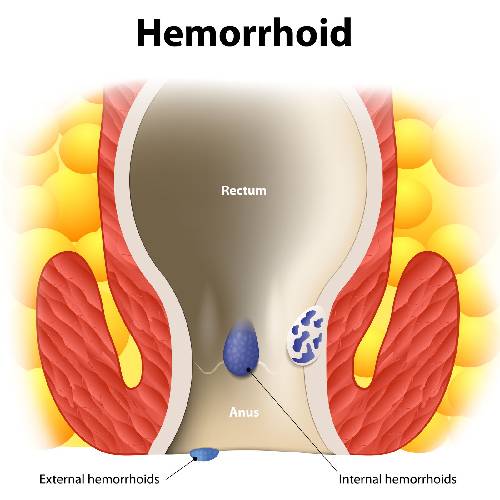 | Laser Treatment Hemorrhoids /Piles Hemorrhoids : Hemorrhoids are varicose (enlarged and swollen) veins around the outside of the anus or in the lower rectum. View product → |
Piles Treatment Piles are varicose (enlarged and swollen) veins around the outside of the anus or in the lower rectum. View service → |
Frequently asked questions
When is recurring bleeding unsafe to label as piles?
Bright-red blood on toilet paper or coating the stool can come from internal hemorrhoids, but blood mixed into stool points higher in the bowel. Recurrent bleeding needs assessment instead of repeated self-treatment.
How does a surgeon confirm where the blood is coming from?
The surgeon reviews your bleeding pattern and symptoms, examines the anus and rectum, and may use anoscopy, sigmoidoscopy or colonoscopy when the history or examination indicates a higher bowel source.
When is laser treatment suitable for hemorrhoids?
Laser treatment can suit selected internal hemorrhoids after the bleeding source and hemorrhoid grade are confirmed. Large prolapsing hemorrhoids, external disease or another bowel cause may require a different treatment.
How can you reduce another hemorrhoid bleeding episode after treatment?
Increase dietary fibre, drink enough water, avoid straining and prolonged toilet sitting, and treat constipation. Follow the surgeon’s instructions for wound care, activity and review appointments.
How should you compare a laser piles surgeon in Mumbai or near Bhandup?
Ask about examination methods, how bleeding causes are ruled out, which hemorrhoid grades the surgeon treats with laser, alternative procedures, anaesthesia, follow-up and what happens if symptoms return.
Related product
 | When the skin of the anus gets cut or damaged, that is called an anal fissure. It is very similar to what happens when our dry lips get chaffed. View product → |