Pain after a previously treated fissure is not proof that the fissure has returned. You will learn how recurrence is defined, which symptoms point to another condition, what a specialist examines, and how treatment choices change when healing or continence risks are involved.
Key takeaways
- Relief followed by renewed pain can indicate a returned or incompletely healed fissure.
- Fistula, haemorrhoids, abscess, and skin conditions can mimic fissure symptoms.
- Share prior treatments, symptom-free intervals, bleeding, constipation, and medications.
- After recurrence, treatment depends on healing, sphincter tension, and the examination findings.
How to tell whether the fissure has actually returned
A fissure has actually returned when symptoms reappear after complete relief, the original wound never fully healed, or similar episodes recur with symptom-free periods between them. Recurring anal pain alone does not prove a fissure is responsible; a new episode can come from another condition.
The typical fissure pattern is cutting or burning pain during a bowel movement, followed by discomfort lasting minutes to hours. You may see a small amount of bright-red blood on toilet paper or on the stool surface. A fissure specialist uses this timing, alongside examination, to distinguish recurrence from unexplained anal pain.
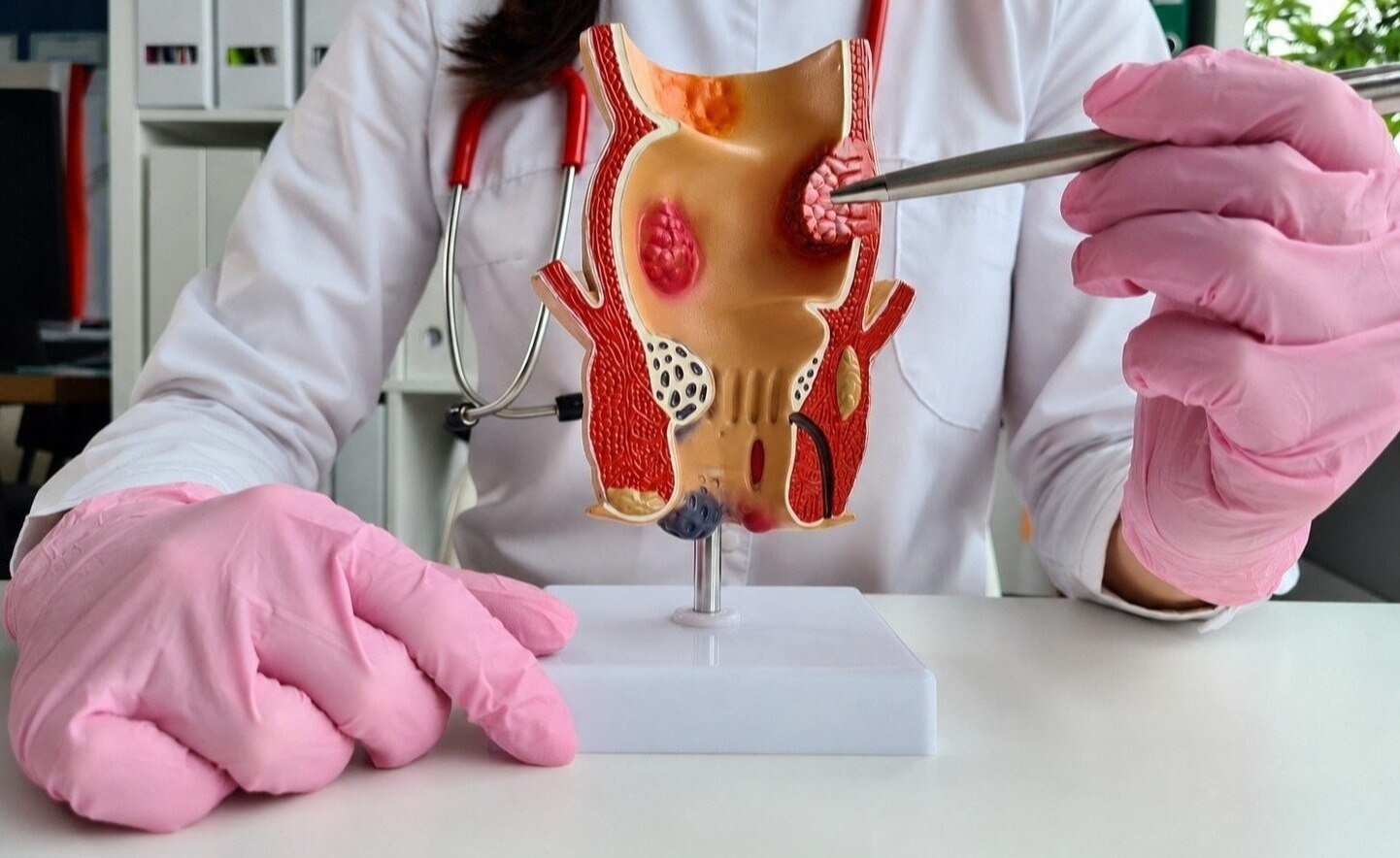
A sentinel skin tag at the outer edge or a hypertrophied anal papilla inside indicates long-standing fissure disease. Neither finding proves that every later pain episode comes from the fissure.
Ask yourself:
- How many bowel movements do you have daily, and has that changed?
- Are stools hard, bulky, loose, or watery?
- Do you strain, sit on the toilet for a long time, or feel incomplete emptying?
- Does pain start during passage, or does it occur independently of bowel movements?
- Does the pain last minutes to hours afterward, or remain constant?
- Does bleeding appear on wiping or the stool surface, and does it occur before, during, or after pain?
- How long were you completely symptom-free after treatment?
Diarrhoea, frequent wiping, and irritation can create anal pain without a recurrent fissure. Fever, swelling, pus, or steadily worsening pain needs prompt medical assessment rather than automatic repeat fissure treatment.
Conditions that can mimic a recurrent fissure
Recurring anal pain does not prove that the fissure has returned. A fissure specialist must exclude conditions with different treatment, especially when pain changes character or the wound never heals.
| Condition | Clues that separate it from a fissure | Usual concern |
|---|---|---|
| Haemorrhoid | Bright-red bleeding, itching, pressure, or a lump; pain is usually less cutting | Prolapse or bleeding |
| Thrombosed haemorrhoid | Sudden, severe pain with a tender blue-purple lump at the anal edge | Clot needing prompt assessment |
| Perianal abscess | Constant, rapidly worsening throbbing pain with fever, swelling, pus, or urinary difficulty | Usually needs drainage; antibiotics alone are not a substitute |
| Anal fistula | Recurrent swelling that bursts, drains pus, or leaves a skin opening | Persistent infected tract |
| Eczema or dermatitis | Itching, burning, redness, scaling, or soreness across the surrounding skin | Irritant, allergic, or fungal trigger |
| Inflammatory bowel disease or infection | Diarrhoea, abdominal symptoms, multiple lesions, discharge, or ulcers | Crohn disease, HIV, tuberculosis, or syphilis |
| Pelvic-floor or neuropathic pain | Pain without a visible wound, triggered by sitting or muscle tension | Muscle spasm or nerve pain |
| Anal cancer | A firm lump, irregular ulcer, persistent bleeding, or altered bowel habit | Requires biopsy and staging |
A lateral, multiple, unusually large, painless, or treatment-resistant fissure is atypical and can signal Crohn disease, HIV, tuberculosis, syphilis, or malignancy.
Seek urgent care for heavy bleeding, black stool, faintness or other anaemia symptoms, unexplained weight loss, a non-healing or irregular ulcer, or new symptoms after age 45–50 according to individual risk.
Why symptoms return and what the examination involves
Hard stools and straining can reopen a healing fissure, but they are not the only causes. Repeated diarrhoea, frequent wiping, incomplete healing, persistent internal anal sphincter spasm, childbirth-related sphincter injury, inflammatory bowel disease, diabetes, smoking, or reduced immunity can also keep symptoms active.
A fissure specialist confirms the cause without forcing a painful examination. Assessment usually follows this order:
- Symptom history: discuss the prior treatment name, treatment dates, symptom-free interval, bowel frequency, stool consistency, bleeding pattern, and current or previous medicines.
- Inspection: the clinician gently separates the buttocks to look for a fissure, skin tag, swelling, discharge, dermatitis, fistula opening, or an atypical ulcer.
- Digital rectal examination: this is done only when tolerable. Forcing it can worsen pain and provide little useful information.
- Anoscopy: a small instrument may be used when appropriate to inspect the anal canal and identify another source of bleeding or pain.
Severe pain or suspected abscess can require delaying forceful examination or routine recurring anal pain treatment. Urgent assessment may instead involve drainage, examination under anaesthesia, imaging, colonoscopy, or referral when the appearance is atypical.
Bring treatment records and note whether symptoms fully stopped. Seek urgent care for fever, increasing swelling, pus, urinary difficulty, or rapidly worsening constant pain; an abscess usually needs drainage, not antibiotics alone.
How treatment choices change after recurrence
A recurrence changes the goal from simply closing the wound to preventing another injury. Increase fibre gradually toward about 25–35 g daily, drink adequate fluids, use a stool softener or osmotic laxative when needed, avoid straining, and take warm sitz baths.
Rapid fibre increases can cause bloating; hard stools and diarrhoea can both re-traumatise the area.
A fissure specialist may offer:
- Glyceryl trinitrate, diltiazem, or nifedipine ointment to lower internal anal-sphincter pressure. Nitroglycerin commonly causes headaches; diltiazem and nifedipine usually cause fewer systemic effects.
- Botulinum toxin, a temporary chemical sphincterotomy that relaxes the muscle without cutting it. It preserves the sphincter but can require repeat treatment and can temporarily affect gas or stool control.
- Lateral internal sphincterotomy, which has healing rates commonly above 90% but carries a risk of impaired flatus or stool control.
- Tailored sphincterotomy, which limits muscle division to the fissure’s length rather than using a longer standard division. Anatomy and baseline continence matter more than pain severity when choosing it.
If you already have incontinence, an obstetric sphincter injury, inflammatory bowel disease, previous anorectal surgery, or other sphincter damage, discuss botulinum toxin or an advancement flap. These sphincter-preserving choices reduce cutting risk but have less predictable healing and may need further treatment.
Dr. Jiten Chowdhry can assess prior treatment, continence, and the fissure’s anatomy before a recurring anal pain treatment is selected.
How to prepare for a focused specialist consultation
Before choosing a fissure specialist, confirm that the consultation will reassess why your recurring anal pain returned—not automatically repeat the previous recurring anal pain treatment. Ask how severe pain will be controlled during inspection, digital examination, or anoscopy.
Use this checklist:
- Ask whether an abscess, fistula, inflammatory bowel disease, infection, or malignancy needs exclusion, especially if the fissure is lateral, multiple, unusually large, painless, or resistant to treatment.
- Ask how baseline continence, previous leakage, childbirth-related sphincter injury, inflammatory bowel disease, or anorectal surgery changes the recommendation.
- Bring treatment records with medicine or procedure names, dates, response, and symptom-free intervals.
- Bring medication details, including laxatives, creams, painkillers, blood thinners, and antibiotics.
- Record stool consistency, frequency, straining, diarrhoea, bleeding timing, and duration. Photographs or notes about bleeding can help when appropriate.
- Write down childbirth history and every anorectal operation.
| Option | Main trade-off | Question to ask |
|---|---|---|
| Sphincterotomy | Reliable healing, but possible gas or stool-control problems | What is my continence risk? |
| Muscle-preserving treatment | Protects the sphincter, but healing is less predictable or treatment may need repeating | Which option fits my anatomy? |
Seek urgent care instead of waiting for an appointment for fever, swelling, pus, constant worsening pain, urinary difficulty, heavy bleeding, black stool, or faintness from blood loss.
Frequently asked questions
How can you tell whether an anal fissure has returned?
A fissure may have returned when pain reappears after complete relief, the original wound never healed, or similar episodes recur after symptom-free periods. Recurring anal pain alone does not confirm a fissure.
What conditions can mimic a recurrent anal fissure?
Fistula, perianal abscess, haemorrhoids, inflammatory bowel disease, and anal skin conditions can cause similar pain, bleeding, irritation, or discharge.
Why do fissure symptoms return?
Symptoms can return when the wound fails to heal, hard stools reopen it, constipation persists, or increased anal sphincter tension limits healing. An examination helps identify the cause.
How does treatment change after a fissure recurrence?
A specialist considers previous treatment, healing, constipation, sphincter tension, and examination findings before choosing continued medical care or a procedural treatment.
How should you prepare for a fissure specialist consultation?
Record when pain occurs, bowel consistency, bleeding or discharge, symptom-free periods, previous medicines or procedures, and any constipation or diarrhoea.