Pain that moves toward the right lower abdomen needs assessment because appendicitis can resemble urinary, bowel and reproductive conditions. You will learn which symptoms demand emergency care, how clinicians confirm the diagnosis, what happens during appendicectomy, and how recovery affects discharge, driving, work and exercise.
Key takeaways
- Seek urgent care for worsening right-sided abdominal pain, fever or repeated vomiting.
- Antibiotics treat infection risk but do not replace surgery in many cases.
- Laparoscopic appendicectomy uses small incisions and usually supports faster recovery.
- Ask when open surgery, drainage or a non-surgical plan is safer for you.
Recognising a possible emergency before you leave for hospital
Pain that starts near the navel and shifts toward the right lower abdomen is a classic warning sign of appendicitis. Suspected appendicitis symptoms also include loss of appetite, nausea, vomiting, fever, abdominal tenderness, and pain that worsens when you walk, cough or move. This recognition starts the appendicectomy treatment process.
| Situation | Action | Why it matters |
|---|---|---|
| Mild, stable symptoms without danger signs | Arrange prompt medical assessment | Appendicitis can worsen even when pain begins gradually |
| Severe or rapidly worsening pain, rigid abdomen, fainting, confusion, persistent vomiting, high fever, or inability to keep fluids down | Go to emergency care now | These appendicitis emergency symptoms can indicate perforation, severe infection or dehydration |
Do not book a routine appointment if you feel faint, confused or seriously unwell. Do not press repeatedly on your abdomen to “test” the pain, apply home remedies, or wait for symptoms to become textbook; these steps can delay treatment.
If urgent surgery seems possible, avoid a heavy meal and large amounts of fluid before assessment. Do not stop seeking care because you have already eaten, and do not delay departure while trying to manage the pain at home.
Ask someone to drive you or call emergency services if you are weak or unsafe to travel.
What happens during triage, examination and diagnosis
Triage starts with temperature, pulse, blood pressure, breathing rate and oxygen saturation. Staff assess whether you need immediate treatment, intravenous fluids or surgical review. They then ask when the pain began, whether it moved, and about vomiting, bowel changes, urinary symptoms, medicines, allergies, previous operations and possible pregnancy.
- The clinician checks for abdominal tenderness, guarding, which is involuntary muscle tightening, and rigidity, which can signal peritoneal irritation.
Appendicitis diagnosis combines these findings with appendicitis tests rather than relying on one result. A complete blood count looks for white-cell changes; C-reactive protein measures inflammation; urine testing looks for infection or blood; and a pregnancy test guides safe imaging and excludes pregnancy-related emergencies when relevant.
| Scan | Main use | Common setting |
|---|---|---|
| Ultrasound appendicitis assessment | Looks for an enlarged appendix without radiation | Children and pregnancy |
| Contrast-enhanced CT appendicitis imaging | Provides detailed abdominal images when uncertainty remains | Adults when examination and initial tests do not settle the diagnosis |
Clinicians compare the pattern with kidney stones, urinary infection, gastroenteritis, ovarian or ectopic pregnancy, pelvic infection, bowel disease and abdominal-wall pain. A normal white-cell count or scan does not automatically exclude appendicitis; the team weighs the complete clinical picture.
Why antibiotics start before surgery and when they are not enough
Antibiotics are normally given before the incision to reduce bacteria associated with the infected appendix. They also treat contamination when perforation, an abscess or peritonitis has allowed bacteria to spread inside the abdomen.
The antibiotic plan depends on what the surgeon finds:
- Uncomplicated appendicitis treatment usually needs no postoperative antibiotics after the appendix is removed and there is no ongoing contamination.
- Perforated appendicitis treatment can require a short postoperative course for perforation, abscess or diffuse peritonitis. The drug and duration follow the operative findings and local policy.
- A contained abscess may need staged treatment: antibiotics, drainage of the collection and later surgical review instead of immediate standard appendicectomy.
Antibiotics for appendicitis do not safely replace source control when symptoms, examination or imaging show an appendix that needs removal. Without removing or draining the infected source, bacteria can continue causing perforation, recurrent infection or peritonitis.
A contained abscess is the important exception to the usual immediate operation plan, not proof that antibiotics alone are suitable for every case.
How laparoscopic appendicectomy is performed and when open surgery is safer
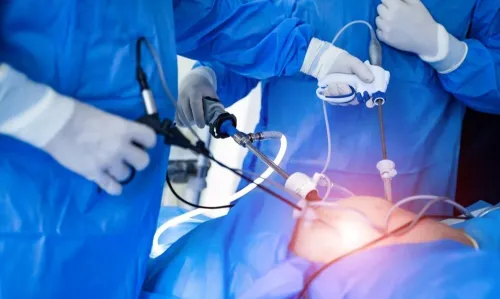
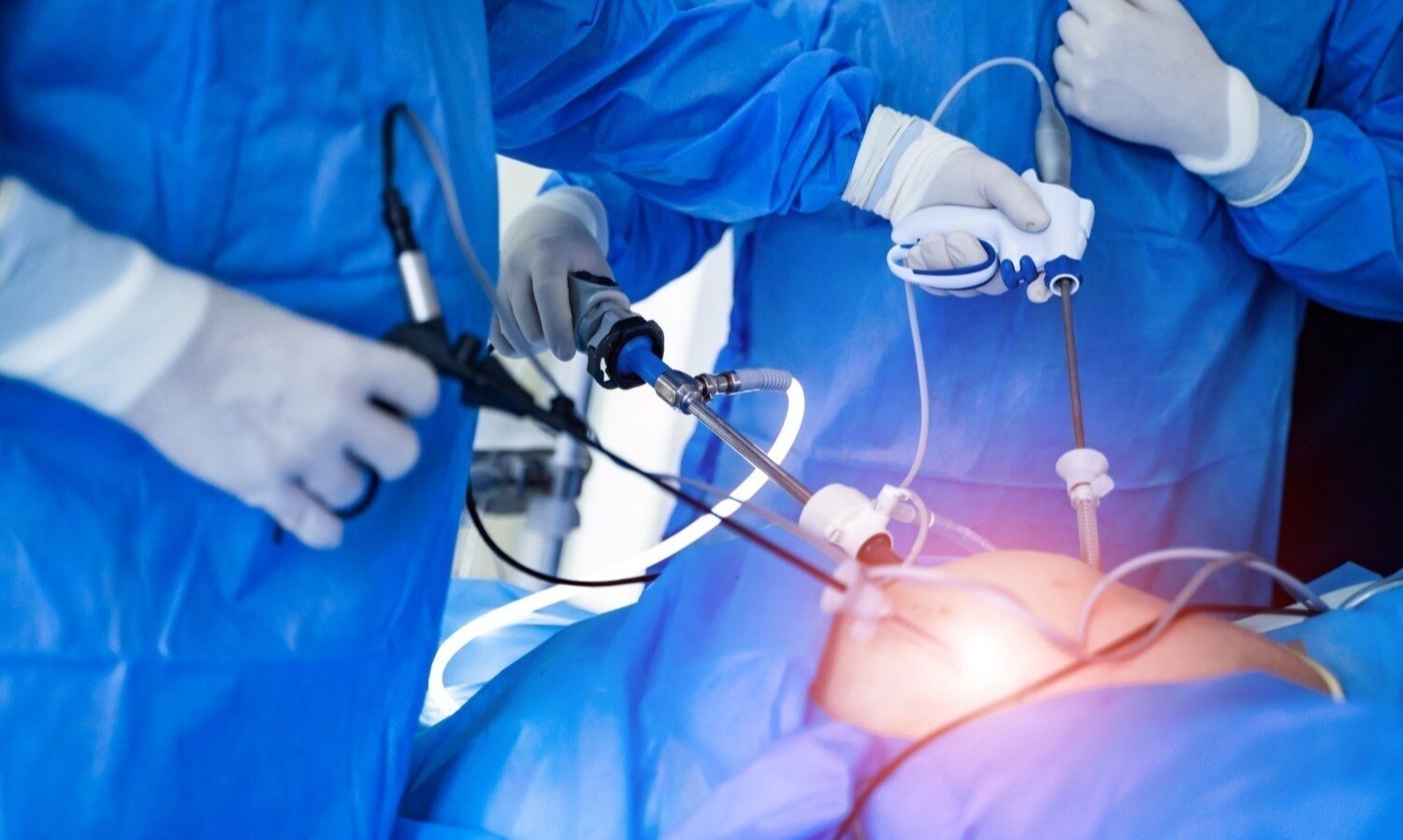
A laparoscopic appendicectomy procedure takes place under general anaesthesia. The laparoscopic surgeon makes an umbilical incision for the camera, then usually adds two small working ports.
After inspecting the abdomen, the surgeon divides and seals the appendix base and blood supply with a stapler, endoloop or another secure method, places the appendix in a retrieval bag, and removes it through a port.
For the laparoscopic surgeon, appendicectomy treatment is a defined process. If perforation has contaminated the abdomen, the surgeon inspects the affected areas and performs washout. A drain is not routine; it is placed selectively when residual contamination or a difficult collection creates a specific concern.
The appendix goes to histopathology, which can identify unexpected disease, including a tumour.
If the appendix looks normal, the surgeon may inspect the rest of the abdomen for another cause rather than automatically remove it. The open appendicectomy comparison matters when safety overrides the benefits of smaller incisions.
| Option | Main features | When it applies |
|---|---|---|
| Laparoscopic | Camera view, three small incisions, retrieval-bag removal, lower wound-infection risk and shorter stay | Preferred when safe |
| Open | Larger incision, direct access, potentially longer recovery | Safer when laparoscopy cannot progress |
Conversion is a safety decision, not necessarily a complication. Dense inflammation, unclear anatomy or appendix base, uncontrolled bleeding, extensive perforation, or anatomy that cannot be defined safely can require open surgery.
Recovery milestones, discharge decisions and warning signs
Appendicectomy recovery begins with pain and nausea control, early walking, and drinking followed by eating as tolerated. Nurses check your wounds, urination and observations, while you shift from intravenous treatment to oral pain medicine.
Appendicectomy discharge depends on recovery and operative findings, not the word “laparoscopic” alone. You can usually go home the same day or after one night when you can:
- Walk safely, pass urine and keep fluids or food down
- Manage pain with oral medicine
- Show stable temperature, pulse, blood pressure and breathing
- Have wounds that look satisfactory after inspection
Perforation, abscess, sepsis, significant pain or inability to eat can require longer observation and intravenous antibiotics or fluids. A laparoscopic surgery recovery is not automatically brief.
Incisional pain, bruising, shoulder-tip pain from carbon dioxide, nausea, constipation and tiredness are expected problems. Seek urgent review for worsening abdominal pain, persistent vomiting, fever, increasing wound redness or discharge, abdominal swelling, breathlessness or inability to pass urine. These are important appendicectomy warning signs.
Do not drive until you can perform an emergency stop without pain, are not impaired by opioid medicine and meet your insurer’s rules. Work and exercise depend on your job and operative findings; increase heavy lifting gradually rather than following a fixed day limit.
Questions to ask before choosing your surgical plan
Do not choose a hospital or operation date until your appendicectomy consultation answers these questions clearly:
- What do my examination, blood tests and imaging show, and does this look uncomplicated or complicated?
- Which anaesthetic is planned, and what could require conversion to open surgery, such as dense inflammation, bleeding or unclear anatomy?
- Will you send the appendix for histopathology?
- How will operative findings determine antibiotic duration?
- What discharge and follow-up criteria must I meet?
| Finding | Question to ask | Possible plan |
|---|---|---|
| Uncomplicated appendicitis | Can I go home when pain, drinking, urination and observations are stable? | Same-day or overnight discharge with oral pain relief |
| Abscess or perforation | Will I need drainage, intravenous antibiotics, washout, selective drainage or staged surgery? | Treatment based on contamination, sepsis and source control |
| Normal-looking appendix | What other abdominal causes will you inspect, and would you remove the appendix? | Investigation guided by the clinical context |
Use these questions for a laparoscopic surgeon to compare facilities, experience and your personalised appendicectomy treatment plan. In Mumbai, Dr. Jiten Chowdhry can use a consultation to review urgency and the proposed approach, but suspected emergency appendicitis needs prompt assessment, not postponement to seek a routine opinion.
Related product
 | Laproscopy Surgery for Appendicectomy Appendicitis is the swelling of the appendix which is present in the right side of the abdominal region. View product → |
Frequently asked questions
What symptoms require urgent assessment for appendicitis?
Seek urgent medical care when abdominal pain moves from the navel to the right lower abdomen, worsens with movement, or occurs with fever, vomiting, loss of appetite or tenderness.
Why are antibiotics given before appendicectomy?
Antibiotics reduce the risk of infection around the appendix and incision. They do not remove an inflamed or perforated appendix when surgery is required.
How is laparoscopic appendicectomy performed?
The surgeon uses general anaesthesia and several small abdominal incisions to insert a camera and instruments, remove the appendix, and close the wounds.
When is open appendicectomy safer than laparoscopic surgery?
Open surgery can be safer when severe infection, a ruptured appendix, extensive inflammation, bleeding or difficult anatomy prevents safe laparoscopic access.
What warning signs should you watch for after discharge?
Contact your surgical team for increasing abdominal pain, persistent vomiting, fever, spreading redness, pus from a wound, abdominal swelling or difficulty passing urine.