An adult umbilical hernia is a defect at or beside the navel that can allow fat or intestine to push through the abdominal wall. The right operation depends on the defect’s size, your medical history, the hernia’s contents and the surgeon’s assessment—not on the word “laparoscopic” alone. By the end, you will know which symptoms need urgent care, how repair is performed, and what to ask before choosing a surgeon in Mumbai.
Key takeaways
- Seek emergency care for severe pain, vomiting, or a hernia that will not go back in.
- Ask whether laparoscopic or open repair better suits your hernia’s size and contents.
- Discuss mesh placement, anaesthesia, recovery time, recurrence risk and wound care before surgery.
- Compare a surgeon’s experience, hospital facilities, evaluation process and follow-up plan.
When an Umbilical Hernia Needs Examination or Emergency Care
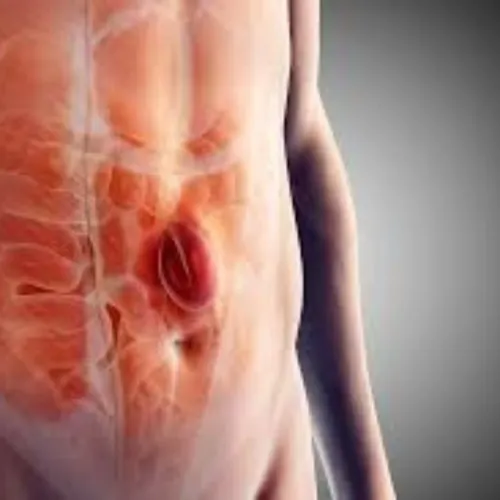
An adult umbilical hernia is a weakness or defect at or near the navel that lets preperitoneal fat, omentum or intestine protrude through the abdominal wall.
A soft lump that reduces when you lie down or with gentle pressure needs routine examination, especially if it persists, causes pain or pressure, or enlarges when you cough or lift. Nausea, vomiting, abdominal distension, or inability to pass stool or gas require prompt medical assessment because the intestine may be affected.
A surgeon usually examines you standing, asks you to cough or strain, and then checks the navel while you lie down. Ultrasound helps identify the contents when the lump is small or the diagnosis is uncertain. CT is more useful with obesity, recurrent or complex hernias, multiple defects, suspected complications, or operative planning.
An obvious, uncomplicated hernia does not automatically require imaging.
Go to an emergency department immediately if you have:
- A suddenly painful, firm lump that cannot be pushed back
- Skin discoloration over the lump
- Repeated vomiting or fever
- Severe or rapidly increasing abdominal pain
- Abdominal distension or inability to pass stool or gas
Do not forcefully manipulate a painful, trapped lump. These signs can indicate incarceration or strangulation, where delayed treatment can threaten the intestine. Arrange assessment before choosing umbilical hernia surgery in Mumbai if the lump is reducible but recurring, enlarging or uncomfortable.
How Laparoscopic Umbilical Hernia Repair Is Performed
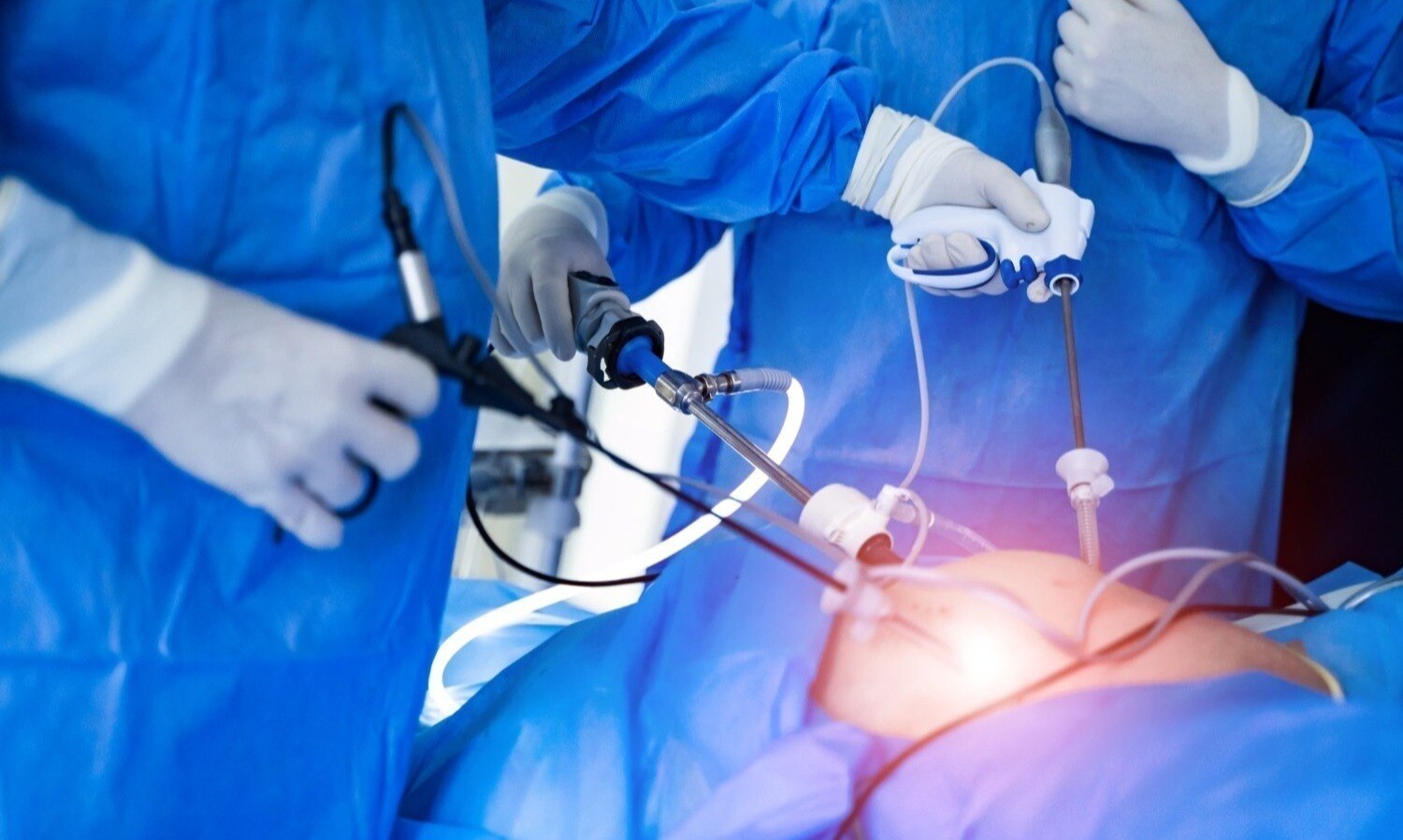
General anaesthesia is usually required, so you will be asleep during laparoscopic umbilical hernia repair in mumbai. The surgeon inflates the abdomen with carbon dioxide and places narrow ports away from the navel, leaving small scars rather than a scar-free operation.
The surgeon inspects the abdominal wall for additional defects, then returns protruding fat, omentum or intestine to the abdominal cavity. Repair may involve suturing the fascial defect closed, bridging it with mesh, or closing it and adding mesh reinforcement, depending on the opening and the strength of the surrounding abdominal wall.
Mesh strengthens tissue around the defect and lowers recurrence for most adult umbilical hernias. A very small primary defect, particularly one below 1 cm, can sometimes be repaired with sutures alone. Mesh must extend beyond the defect and be fixed securely with sutures, tacks or another fixation method; inadequate overlap or fixation increases recurrence risk.
The planned mesh plane matters. Intraperitoneal mesh contacts the abdominal cavity and can expose bowel to adhesions, obstruction or erosion. A preperitoneal or retromuscular position may be feasible when the anatomy permits it.
Ask your surgeon to explain:
- The measured defect, any second defect and whether the fascia will be closed.
- The mesh overlap, fixation method and planned plane.
- The risks of infection, seroma, bruising, chronic pain, bowel injury, port-site problems, recurrence and conversion to open surgery.
Laparoscopy does not remove these risks or guarantee faster recovery.
Laparoscopic or Open Repair: Which Route Fits Your Hernia?
A small, primary umbilical defect often suits open repair. Laparoscopy is considered more often for larger, recurrent or multiple defects, obesity, or concern about wound complications, but it does not guarantee faster recovery.
| Option | Incision and entry | Anaesthesia, operation and recovery |
|---|---|---|
| Open repair | One incision over the navel; no abdominal entry or extra ports | Local, regional or general anaesthesia may be possible; operating time, pain, stay, lifting limits and return to ordinary activity depend on the repair |
| Laparoscopic repair | Several small incisions away from the navel; the abdomen is inflated and entered with ports | General anaesthesia is required; operating time can be longer, while postoperative pain, hospital stay and activity recovery vary rather than showing a universal advantage |
Open repair can avoid port-site problems and abdominal entry, making it practical for a very small primary defect or for someone who cannot safely undergo general anaesthesia. A large or complex hernia may require a different plan.
Previous abdominal surgery does not automatically rule out laparoscopy, but adhesions can make entry harder and increase bowel-injury risk.
Diastasis recti is a wider midline weakness, not a hernia, but both can coexist. Closing only the central defect may leave that weakness untreated, which changes recurrence counselling.
For laparoscopic umbilical hernia repair in Mumbai, the route depends on the measured defect and location, recurrence, comorbidities, body habitus, prior operations, surgeon experience and hospital capability. Discuss these points with a laparoscopic surgeon for umbilical hernia surgery in Mumbai before choosing an advertised “minimally invasive” option.
Risks, Preparation and Recovery After Repair
1. Recurrence can follow a large defect, obesity, smoking, wound infection, inadequate mesh overlap or fixation, or an unrecognised second defect. Laparoscopic access does not eliminate this risk; ask how the mesh will overlap and be fixed.
2. A seroma, bruising, wound infection, chronic pain or temporary numbness can affect recovery. Mesh position and fixation influence these problems: intraperitoneal mesh can form adhesions to bowel, with rare obstruction or erosion, while fixation can irritate nerves and cause persistent pain.
3. Stop smoking, improve poorly controlled diabetes, treat a chronic cough and discuss weight reduction before planned umbilical hernia surgery in Mumbai. These steps can reduce wound and recurrence risks, but optimisation must never delay emergency treatment for a trapped or strangulated hernia.
4. Before leaving hospital, ask when you may drive, work, exercise and lift, how to monitor the wound, and whom to contact for fever, worsening pain, vomiting, redness, drainage or a new bulge. Hospital stay and recovery depend on repair complexity, anaesthesia, previous operations and complications.
Request written, patient-specific restrictions rather than accepting a blanket “quick recovery” promise.
How to Choose a Laparoscopic Surgeon in Mumbai
Verify registration, training and hospital access before choosing a laparoscopic surgeon in Mumbai. Check the doctor’s registration with the National Medical Commission or Maharashtra Medical Council, formal general-surgery training, minimally invasive surgery experience, and the number and type of abdominal-wall repairs performed. Marketing terms such as “advanced” or “laser” do not prove expertise.
A properly equipped hospital and experienced anaesthesia team matter because laparoscopic repair uses general anaesthesia and can require conversion to open surgery. Compare the routes before consenting:
| Option | Main advantage | Important trade-off |
|---|---|---|
| Open repair | Suits some very small primary defects; avoids ports | Incision and wound-related risks |
| Laparoscopic repair | Useful for selected larger, recurrent or multiple defects | Abdominal entry, mesh fixation and bowel-injury risks |
Take this checklist to your consultation for umbilical hernia surgery in Mumbai:
- Is the hernia primary or recurrent, and what is the measured defect size?
- Is diastasis recti present?
- Why is laparoscopic or open repair preferable for you?
- Will the defect be closed, bridged or reinforced?
- What mesh material, overlap, fixation method and plane are planned?
- How do prior abdominal surgery, obesity or other medical conditions change risk?
- What are the expected operating time, hospital stay, lifting restrictions and follow-up plan?
- How will seroma or chronic pain be managed, and what happens if recurrence occurs?
A consultation with Dr. Jiten Chowdhry, or another suitable laparoscopic surgeon for umbilical hernia surgery in Mumbai, should produce a documented, individualised plan—not a procedure selected from an advertisement. Ask for alternatives and emergency pathways in plain language.
Related product
 | Laparascopic Surgery For Umbilical Hernia Umbilical hernia is a bulge form in abdomen. In children, it is healed on its own but if this disease occurs in adults then a surgery is needed. View product → |
Frequently asked questions
When does an umbilical hernia need emergency care?
Seek emergency care for severe or worsening pain, vomiting, abdominal swelling, skin discolouration, or a bulge that becomes firm and cannot be pushed back.
How is laparoscopic umbilical hernia repair performed?
The surgeon uses small abdominal incisions, inserts a camera and instruments, returns the protruding tissue, and reinforces the abdominal-wall defect, often with mesh.
Is laparoscopic or open umbilical hernia repair better?
The choice depends on the defect’s size and location, its contents, previous operations, your health and the surgeon’s assessment.
What should you ask a laparoscopic surgeon in Mumbai before surgery?
Ask about the recommended approach, mesh and fixation method, anaesthesia, expected recovery, complications, recurrence, hospital arrangements and follow-up.