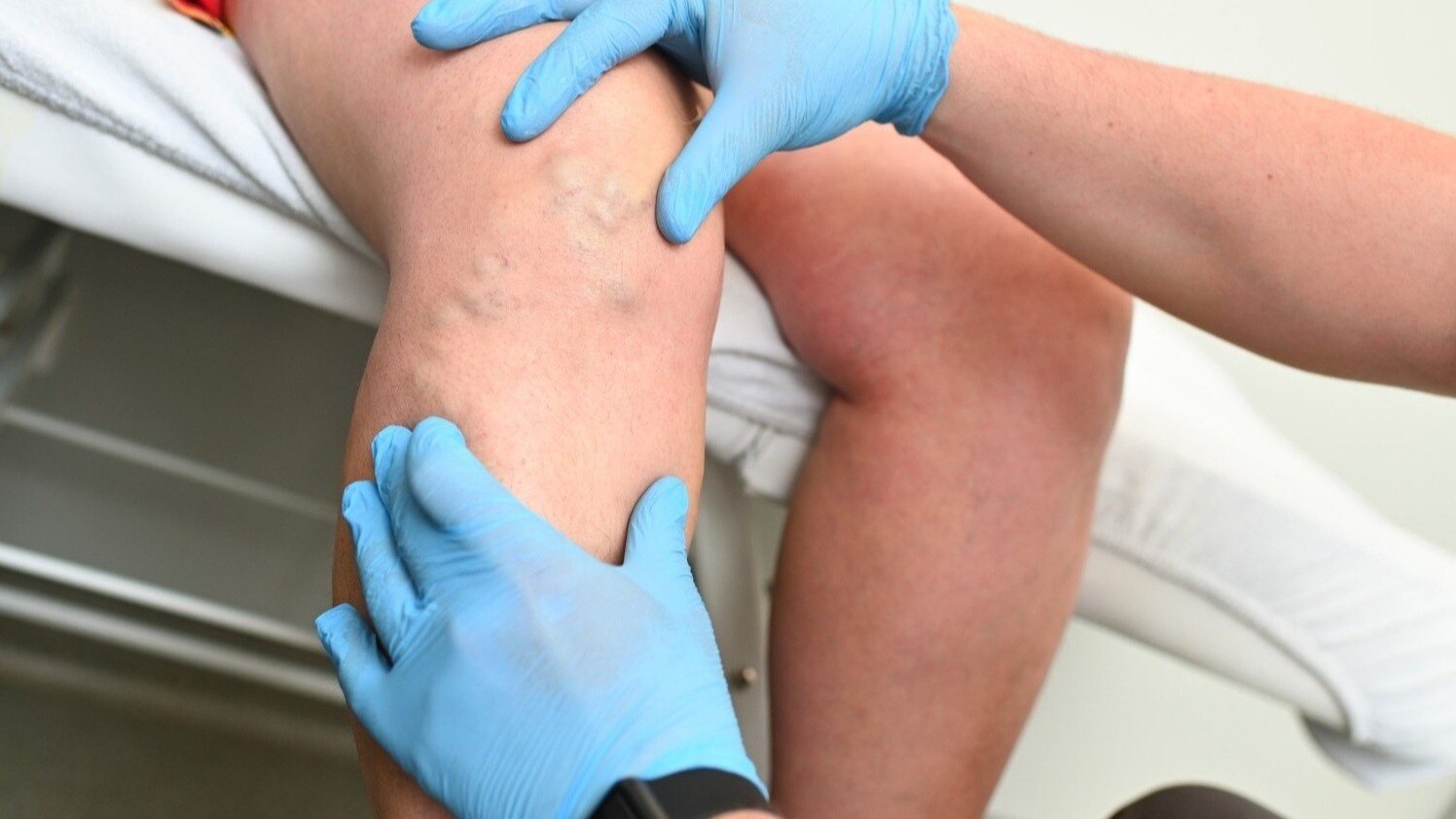
Bruising, tenderness, tightness and activity questions are common after endovenous laser ablation, but worsening swelling, severe pain or breathing symptoms need a different response. You will be able to plan each stage of recovery, use compression safely, resume work and exercise sensibly, and recognise when a specialist needs to assess you.
Key takeaways
- Walk soon after treatment and continue short walks during recovery.
- Wear compression exactly as your clinician directs, including when to remove it.
- Expect bruising and tenderness around the treated vein and puncture sites.
- Contact your clinician promptly for severe pain, breathlessness or worsening leg swelling.
What to expect from the treatment day through the first few weeks
Endovenous laser ablation is usually an outpatient procedure under local anaesthetic. You normally walk shortly afterwards, wear a clinician-directed compression stocking and go home the same day. Endovenous laser recovery is mainly a gradual return to normal activity while bruising, tenderness and swelling settle.
- On treatment day: Expect small puncture sites, local numbness and a tight or pulling sensation along the treated vein. Walk as instructed before leaving, but arrange transport if the anaesthetic or medication affects your alertness.
- During the first 48 hours: Bruising, mild swelling, tenderness and a firm, cord-like area can appear or become more noticeable. Take short walks rather than resting in bed, avoid prolonged sitting and elevate the leg when resting.
- Around one week: Many people return to desk work and ordinary walking within a few days. Bruising and sensitivity should start easing, although the treated vein can still feel tight; follow your clinician’s instructions before driving, strenuous exercise, heavy lifting, swimming or hot baths.
- Over the following weeks: Discomfort should steadily improve, and bruising should fade. Temporary tingling or numb skin near the lower leg or ankle can occur, but spreading numbness, weakness or worsening pain needs medical review.
Recovery is not judged by a fixed one-day promise. Seek prompt advice if redness spreads, swelling increases, the leg becomes very painful, or you develop breathlessness or chest pain; these changes need assessment rather than extra compression or continued exercise.
The first-week routine: walking, compression, washing and sleep
During the first 48 hours, walk soon after treatment and repeat short, easy walks throughout the day. Bed rest and long periods in a chair slow calf-muscle blood flow and raise clot risk.
- Walk for a few minutes every hour while awake, using support if your leg feels unsteady.
- Avoid sitting or standing still for long stretches; flex your ankles during brief rests.
- Elevate the leg on pillows when resting, keeping it comfortably above heart level.
- Shower only when your dressing instructions allow it, often after 24 hours; avoid baths, swimming and hot tubs during the first week.
- Sleep on your back or side with the treated leg supported by a pillow. Do not sleep with a tight, folded stocking pressing behind the knee.
Compression hosiery is part of vein treatment aftercare only when your clinician prescribes it. Follow the specified pressure, fit and wearing schedule; NICE advises that compression used after interventional treatment generally should not continue beyond seven days. Remove it and seek advice for numbness, blue or pale toes, increasing pain, coldness or severe pressure.
Tell the clinician if you have peripheral arterial disease.
For post ablation care, drive when you can sit comfortably, operate the pedals and perform an emergency stop without pain, and are no longer affected by sedatives; this is often after 24 to 48 hours. Do not drive while taking opioid pain medicine.
Managing bruising, tenderness, medicines and puncture sites
Bruising, tenderness, mild swelling and a tight or cord-like pull along the treated vein are common during varicose vein recovery. They often peak during the first few days, then fade over several weeks; worsening pain or swelling needs review rather than repeated self-treatment.
Use the pain medicine recommended by your clinician. Paracetamol is suitable for many people, but check the dose and avoid it if you have been told not to take it. Do not add aspirin, ibuprofen or another anti-inflammatory while taking an anticoagulant unless your clinician approves it.
Keep the small puncture-site dressing clean and dry for the period specified by your clinic. Replace a wet or loose dressing with a clean one, wash your hands before touching the site, and do not pick scabs or apply creams. Avoid soaking in a bath or pool until the skin has closed.
| Change | What it means | What to do |
|---|---|---|
| Bruising, mild tenderness, firm cord | Expected local healing | Walk as advised and monitor gradual improvement |
| Redness spreading beyond the puncture, warmth, pus or fever | Possible infection | Contact your treating clinician promptly |
| Persistent bleeding or a dressing soaked with blood | Poor control of the puncture site | Apply firm pressure and seek medical advice |
| Numb, cold, pale or blue toes, severe pain, or a stocking edge digging in | Unsafe compression fit | Remove it and contact the clinic for fitting advice |
Returning to work, exercise, lifting and air travel
Desk work and ordinary walking often resume within a few days after EVLA, while walking immediately after treatment is usually encouraged. Your endovenous laser recovery schedule depends on how many veins were treated and your clinician’s examination.
- Walk: Take short, frequent walks from the day of treatment. Increase distance as tenderness settles; do not replace walking with bed rest.
- Desk work: Return when you can sit comfortably, often within two to three days. Stand and walk for five to ten minutes every hour, perform ankle pumps, and avoid crossing your legs.
- Running: Wait about one to two weeks, then restart only if swelling and tenderness are improving.
- Strength training and heavy lifting: Avoid strenuous leg exercises, squats, deadlifts and heavy lifting for roughly one to two weeks, or until your clinician approves them.
- Swimming: Wait until puncture sites are closed, dry and free of dressings, commonly about one week.
- Hot baths, saunas and hot tubs: Avoid them for about one to two weeks because heat can worsen swelling and bruising.
- Air travel: Ask for clearance before flying. Avoid long-haul flights during early varicose vein recovery; if travel is approved, walk the aisle regularly, flex your ankles, drink water and follow compression advice.
Stop activity that causes increasing pain, swelling or bleeding. Contact your treating clinician before advancing exercise or travel.
When to contact a varicose veins specialist after ablation
Contact a varicose veins specialist after endovenous laser ablation urgently for new one-sided calf swelling, marked whole-leg swelling, rapidly worsening pain, chest pain, shortness of breath, coughing blood or fainting. These symptoms require assessment for deep-vein thrombosis or pulmonary embolism, not tighter compression or watchful waiting.
A firm, tender cord along the treated vein, bruising and mild swelling can fit expected laser ablation recovery when they steadily improve. Persistent or worsening symptoms need a clinical examination and duplex ultrasound, not an automatic repeat procedure.
| Finding | Investigation before further treatment | Why it matters |
|---|---|---|
| Persistent pain or swelling | Examine the leg and perform duplex ultrasound | Confirms target-vein closure and checks deep-vein obstruction, thrombus extension or another reflux source |
| Suspected clotting | Urgent clinical assessment and duplex imaging | Separates superficial inflammation from deep-vein thrombosis |
| Tingling or numbness | Map the affected area, test strength and review the treated vein’s course | Persistent, spreading or motor symptoms can indicate sensory-nerve injury |
| Recurrent veins | Duplex ultrasound with standing reflux assessment | Identifies an untreated tributary, recanalisation or new reflux before phlebectomy or repeat ablation |
Temporary tingling near the ankle or lower leg can follow heat-related nerve irritation. Do not keep increasing compression to manage numbness.
Dr. Jiten Chowdhry’s review should connect your symptoms with the scan before recommending another intervention. Good post ablation care includes investigating the cause rather than treating the visible vein alone.
Related products
 | VARICOSE VEINS TREATMENT WITH ENDOVENOUS LASER ABLATION What does it mean varicose veins endovenous ablation? vein-ablation-procedureVaricose pathology and its best methods of treatment have been developed... View product → |
 | Laser Surgery for Varicose Veins Laser Surgery for Varicose Veins View product → |
Frequently asked questions
How soon can you walk after endovenous laser ablation?
You normally walk shortly after the outpatient procedure. During the first week, take regular short walks and avoid prolonged sitting or standing.
How should I manage compression, washing and sleep after ablation?
Follow your clinician’s instructions for stocking duration and removal. Keep puncture sites clean and dry as directed, and sleep in the position that does not increase discomfort.
When can I return to work, exercise or air travel after endovenous laser treatment?
Return timing depends on your work, symptoms and clinician’s advice. Resume light activity first, delay strenuous exercise and heavy lifting until cleared, and ask before flying.
When should I contact a varicose veins specialist after endovenous laser ablation?
Contact your clinician for worsening pain, increasing redness or swelling, wound discharge, fever, marked calf swelling, chest pain or breathlessness.